Introduction
The Hobbit trilogy (2012–2014), directed by Peter Jackson, tells the story of Bilbo Baggins, an unlikely hero chosen by Gandalf to join a company of dwarves on their quest to defeat the dragon Smaug and reclaim their homeland. While Bilbo begins the journey reluctantly, his courage and wit quickly prove vital.
In this review, I will go through each movie individually before sharing my thoughts on the trilogy as a whole. For context, I have not read Tolkien’s books and have only previously seen The Lord of the Rings: The War of the Rohirrim. So, these are the impressions of a mostly fresh viewer stepping into Middle-earth.
Movie 1: An Unexpected Journey
Synopsis
Bilbo Baggins, a hobbit enjoying his quiet life, is swept into an epic quest by Gandalf the Grey and thirteen dwarves who seek to reclaim their mountain home from Smaug, the dragon.
What Worked Well
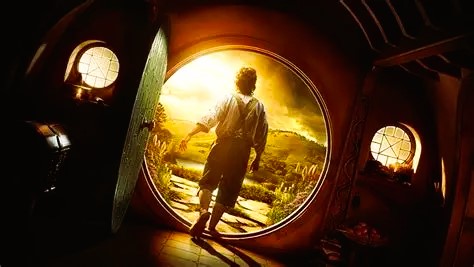
- Visuals: The visuals were stunning. I liked how Hobbits and Elves lived in bright, airy places, while Dwarves and Orcs lived in darker environments. This contrast symbolized their histories and conflicts, and as someone new to these characters, it helped me distinguish them more easily.
- Humour: “I am Gandalf… and Gandalf means… ME!” was one of the funniest lines I’ve heard in a long time. The delivery was so straight-faced that it worked perfectly. Humor was sprinkled throughout at just the right moments, often balancing the action scenes.
- Action: The choreography and cinematography made every battle thrilling and engaging. I loved every fight and even wanted more.
- Pacing: For most of the film, the pacing felt balanced, with fast action sequences followed by slower, more thoughtful moments. The riddle scene between Bilbo and Gollum was especially strong, with sharp dialogue that kept the stakes clear.
What Didn’t Work
- Length: At just under three hours, the film felt too long. By the final half hour, I was waiting for it to end.
- Bilbo’s Role: I like Bilbo as a character, but his selection as the “burglar” wasn’t well explained. Gandalf seemed to choose him at random, which felt forced.
Personal Reaction
Despite my complaints about the runtime, I still enjoyed this movie a lot. If the ending had been tighter, it might have been near perfect. Rating: 4/5
Movie 2: The Desolation of Smaug
Synopsis
The dwarves, Bilbo, and Gandalf have successfully escaped the Misty Mountains, and Bilbo has gained the One Ring. They continue their journey to reclaim their gold from Smaug, the dragon.
What Worked Well
- Action: The barrel sequence and the scenes with Smaug were highlights. Peter Jackson’s action direction is consistently impressive—tense, exciting, and visually inventive.
- Villains: Smaug was animated and voiced brilliantly, stealing every scene he was in despite limited screen time. The Orcs were also effective, bringing menace whenever they appeared.
- Pacing: Even though it was roughly the same length as the first film, this one felt faster and more engaging.
- The Barrel Scene: This was the standout of the trilogy for me. It mixed humor and action flawlessly and showed Jackson at his best.
What Didn’t Work
- Less Gandalf: Gandalf is my favorite character, and his reduced role here left me wanting more. His few scenes, while cool, weren’t enough to satisfy.
- Romance Subplot: The elf-dwarf love story felt forced and unnecessary. Instead of adding to the plot, it distracted from the main adventure.
Personal Reaction
Although I missed some of the humor from the first film, the action and pacing kept me hooked. Rating: 3.5/5
Movie 3: The Battle of the Five Armies
Synopsis
After Smaug attacks Laketown, Bilbo and the dwarves must defend Erebor from men, elves, and an oncoming army of Orcs. Meanwhile, Sauron’s power grows in the background, and Bilbo faces difficult choices as the fate of Middle-earth hangs in the balance.
What Worked Well
- Action: The large-scale battles were spectacular. Sweeping shots of the battlefield made the chaos feel massive and epic.
- Visuals: The landscapes, creatures, costumes, and sets were beautifully detailed. Laketown’s destruction was especially well-designed and immersive.
- Ending: The story concluded well, giving Bilbo and Thorin satisfying moments of closure.
What Didn’t Work
- Smaug: His defeat in the opening fifteen minutes was anticlimactic. It would have been more impactful if it had ended the second film instead of beginning this one.
- Pacing: Once Smaug was gone, much of the middle felt like filler while waiting for the final battle. Even without reading the book, it seemed padded out.
Personal Reaction
This was a solid conclusion to the trilogy. It wasn’t perfect, but it wrapped up the story in a way that felt right. Rating: 3.5/5
Overall Thoughts
Comparison of the Three Movies
The Hobbit trilogy was a delight overall, capturing the magic and atmosphere of Middle-earth. Of the three, the first film was my favorite, thanks to its humor and sense of whimsy. The Desolation of Smaug stood out for its action, especially the barrel sequence, while The Battle of the Five Armies delivered the biggest battles but felt heavier and less playful.
Strengths and Weaknesses
The trilogy’s greatest strengths were its world-building, visual design, and ability to blend humor with epic storytelling. The action sequences were consistently strong, and the characters memorable. However, the runtimes were excessive, and the story sometimes felt overextended compared to its source material.
Impact on Reading the Book
These films made me want to read The Hobbit. If the adaptations were this entertaining, I’m curious to see how the original book compares. Since it’s written for children, I expect it to be lighter and quicker than the films, which makes it even more appealing.
Recommendations
I’d recommend the trilogy to fantasy fans who enjoy epic adventures, especially those who already love The Lord of the Rings. For those who prefer a leaner story, reading the book first might be the better option. Overall, I’d rate the trilogy 3.5/5: entertaining, often spectacular, but uneven.

 Nate Laver
Leave a comment