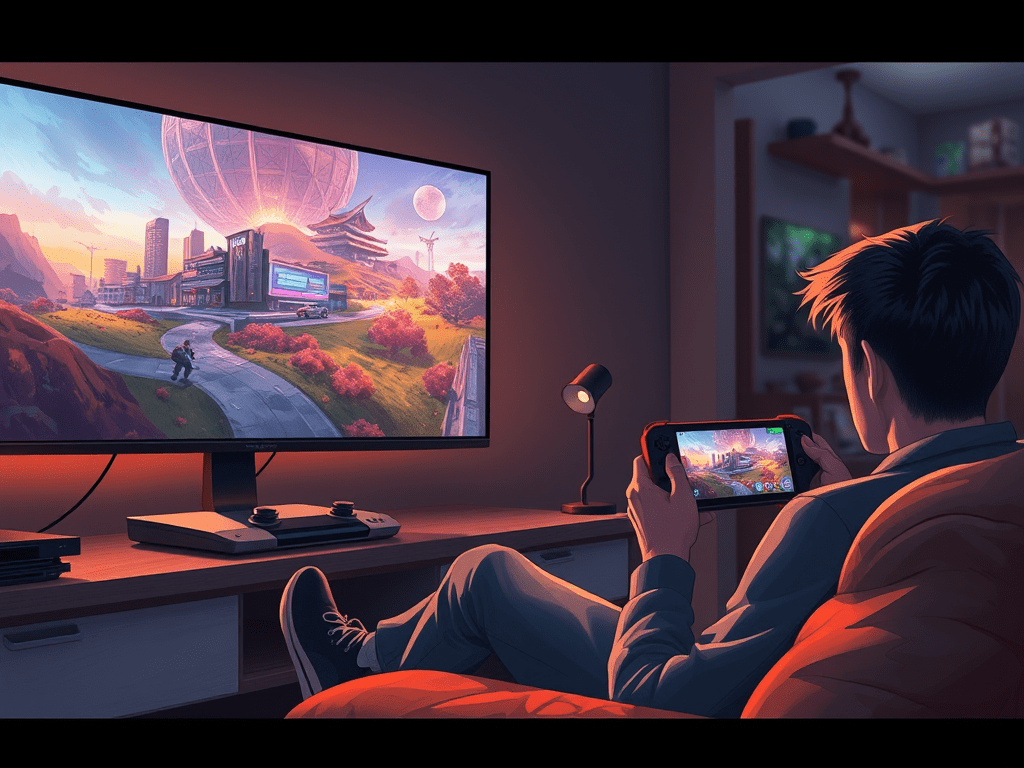
When it comes to gaming, there’s always been a split between consoles and handhelds. Consoles bring power, big screens, and immersive experiences, while handhelds shine with portability and convenience. I’ve spent time with both, and honestly? I enjoy what each has to offer. But more than anything, I’m drawn to the middle ground—the hybrids. They capture the best of both worlds, and that balance is what makes them so exciting. Still, to see where each shines, let’s break down the pros and cons.
1. The Console Experience
Strengths
- Better graphics and performance: Home consoles are larger and more powerful, so they deliver smoother gameplay and higher-quality graphics.
- Big-screen immersion: Playing on a TV or monitor makes the experience more cinematic and immersive. Hardcore players often see this as a must-have.
- Bigger game library: Popular titles like Grand Theft Auto and Call of Duty are typically console/PC exclusives, so the selection is often wider.
Weaknesses
- Higher cost: Between the console, TV/monitor, accessories, and games, the cost adds up quickly. My setup alone is around £1–1.5k!
- Less portable: A console tied to a TV stays at home. If you want to game on the go, this isn’t the right option.
- Takes up space: With both the console and a TV, you’ll need a dedicated area. Not ideal if you’re short on space.
2. The Handheld Experience
Strengths
- Portability: You can play anywhere—on the bus, on a train, or just lounging at home. It’s easy to pick up and pause whenever you like.
- Usually cheaper: There’s no need for an external screen or extra controllers, which makes the overall cost lower. That leaves more budget for games!
- Unique features: Touchscreens, dual screens, and portability-focused design give handhelds their own charm. For example, on the Nintendo 3DS, Harvest Moon games had permanent maps on the bottom screen—so useful.
- Exclusive titles: Handhelds have historically hosted some of the most beloved series. Think Pokémon, Animal Crossing: New Leaf, Monster Hunter Portable, and even quirky gems like Professor Layton. These games often make handhelds worth owning all on their own.
Weaknesses
- Weaker hardware: Smaller size means less powerful components. You won’t find many “hardcore” titles like Call of Duty here.
- Smaller screen = less immersive: Unless connected to a TV, handheld screens don’t offer the same level of detail or immersion.
- Battery life: Without constant power, you’re limited to battery charge. Over time, batteries also degrade, cutting session length.
3. Direct Comparison
| Category | Consoles | Handhelds |
|---|---|---|
| Cost | Higher setup cost | Usually cheaper overall |
| Portability | Stays at home | Play anywhere |
| Game library | Larger, more variety | Smaller but unique |
| Longevity | Generally more durable | Battery wear over time |
4. Which is Right for You?
TL;DR
- Console: Best for immersion, performance, and big game libraries.
- Handheld: Great for on-the-go players, budget-conscious gamers, or nostalgia fans. Plus, handheld exclusives can be some of the most memorable.
- Hybrid: If you want both, I’d recommend the Nintendo Switch or Steam Deck (with a dock).
Conclusion
Personally, I’d go with a hybrid. I love having the best of both worlds, and growing up with both consoles and handhelds, hybrids feel like a dream come true. Ultimately, though, the choice comes down to what you value most in your gaming setup.
What about you—console, handheld, or hybrid? Let me know below!, handheld, or hybrid? Let me know below!

 Nate Laver
Leave a comment